Nobody Counts by Looking
The Charity Clothing Guild of Tornellosa is four women, eleven years of Thursdays and a bedspread of eighty-one crochet rosettes that has just won the Provincial Council's prize. An unsigned letter reaches the court: it says the bedspread was bought in a workshop and the thousand pesetas were collected by deceit. The court seals the room and sends an expert to rule on who made the work. Nobody is dead, nothing is missing and no door has been forced. But the bedspread has eighty-one rosettes and the room has four pairs of hands.
Nobody Counts by Looking
Chapter 1
I
The country bus stopped in the square at Tornellosa at half past eleven and two men got down. One was tall and young and carried a leather satchel under his arm. The other was short and broad, with a very well-kept grizzled moustache, and he took off his hat to get down although there was no sun.
At the fountain there were four women with their pitchers full and not one of them moved. In Tornellosa they had known since Tuesday what those two were coming for.
"It is just across there," said the young man. "The granary. The council has let the Guild have the downstairs room since before the war."
"And whom does one ask for permission, monsieur Uceda?"
"Nobody. We are carrying an order from the court."
"That is not the same thing as permission," said Valmont. "I like to ask for it in any case, and it takes less time besides."
Don Marcial Uceda was clerk to the court of first instance at Nébeda. He had spent five years signing papers underneath other men. That morning they had given him an order, an expert and a car, and it showed in the way he walked.
"I warn you that they are going to receive us frankly badly here."
"They are going to receive us very well," Valmont replied. "It is afterwards that they will speak to us badly."
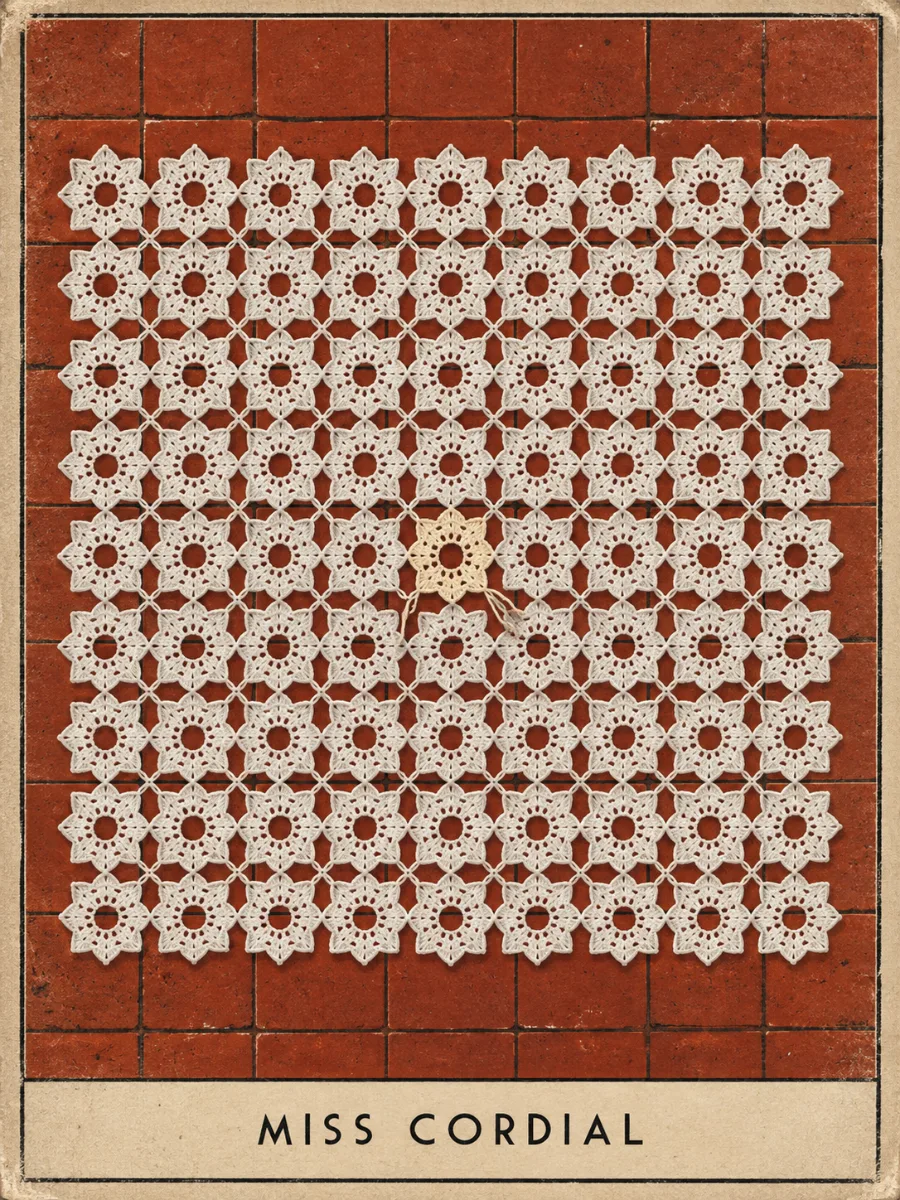
The downstairs room of the granary was long and cool, with two high windows and a floor of red tile. In the middle there was a table with a chestnut top, of the kind used for kneading. The bedspread lay on it. It covered the whole table and hung a handspan over on all four sides. It was white, made of eighty-one crochet rosettes sewn one to another, nine across and nine down, and it had been laid so that the light of the two windows came in along its length. In that room, where there was nothing else but a cupboard, a bench and a print of the Virgin, it looked like something out of place, like a cake in a stable.
Beside the table there were four rush-seated chairs and a charcoal brazier. A girl of nineteen came in just then by a small door at the far end, with the copper pan of embers in a cloth and her face turned away so as not to breathe the smoke, and she put the embers under the table without looking at anybody.
"Jacinta," said a voice. "The gentlemen first."
The woman who had spoken was in her sixties, spare and well combed, in an old mourning dress with a jet brooch. She got up from the bench and put out her hand to Uceda and not to Valmont, who was the one holding his hat.
"Micaela Loriga, widow of Sandoval. President of the Charity Clothing Guild of this town."
"Aristide Valmont, madame, at your service."
"Madame?"
"It is señora in my language, and it has been escaping me for thirty years. I am from Neuchâtel, which is in Switzerland and is of no interest to anybody."
Doña Micaela looked at him just long enough to make it clear that she had heard him.
"Here they will take that for something else."
"I know, madame. I generally make use of it."
Doña Micaela did not know what to answer to that and decided not to answer.
"You are the one who has come to say whether we are lying."
"I have come to say how a bedspread is made. The rest is no business of mine and I should not know how."
She went on looking at him a second longer than was polite. Then she pointed at the other three with an open hand, the way a family is introduced at a funeral.
"Rosenda Ayerbe. Cándida Berzosa. Paulina Cobos. There are four of us and there have been four of us for nine years."
Rosenda was the tallest and the only one who stood up to greet him. Cándida said good afternoon from her chair and went back to her work. Paulina wiped her hands on her apron before she gave him hers, and her hand was dry and strong and her nails were cut flush.
Doña Micaela pointed them out with her chin, in the order in which they were sitting.
"Rosenda and Cándida have always been from here," she added. "Paulina came from outside as a widow twenty years ago and joined the Guild nine years ago. She has no family here at all and she has worked more than any of the four of us, and I say that in front of anybody."
"Sit down," said doña Micaela. "Thursday is Guild day and today is going to be Guild day, even if the court comes. Jacinta, the chocolate."
"It is a quarter to twelve, señora."
"I said the chocolate."
Uceda opened his satchel on the bench, because there was no room on the table, and took out two sheets. He stood up to read. Valmont stayed where he was and folded his hands.
"It is required that the interested parties should know the tenor of the complaint," said Uceda. "I shall read it in full."
"Read it in full," said doña Micaela.
"'To the judge of first instance of Nébeda. The bedspread with which the Charity Clothing Guild of Tornellosa has won the prize of the Provincial Council was not made by the ladies who sign the record. It has been bought and paid for in a workshop outside, and the thousand pesetas have been collected by deceit. I accuse no one in particular, because the four of them signed and the four of them were paid, and where there are four signatures there are four equal guilts. That bedspread was made by hands from outside. Let the middle one be looked at. A person who knows it and does not wish to give a name.'"
Nobody in the room said anything for a long while. The charcoal could be heard.
"And that is admitted?" asked Rosenda. "A paper with no signature?"
"The paper is admitted, not the signature. The court is not proceeding against you because of what an anonymous letter says, señora. It is proceeding because there are a thousand pesetas of provincial funds, and that has to be looked into even if it is an anonymous letter that says so."
"I see."
"And that is why the expert is here. He gives his opinion on the work and the court gives its opinion on the rest."
"On the work," doña Micaela repeated.
"On the work, madame," said Valmont. "I have no authority at all over people, and I think it quite right that I should not. They give it to me over things, and only once there is a suit. I have spent thirty years saying why a house burned or why a scaffold came down, and I assure you that a thing lies a great deal worse than a Christian."
"And meanwhile, what happens about May?" asked Cándida, without looking up.
"May is the Regional Exhibition in the capital," doña Micaela explained to Valmont, as though answering Cándida were a piece of bad manners. "The bedspread goes there with the other prizewinners of the province. And it goes with its record, which I have had signed since March: name, surnames and place of residence of the four of us who made it, because the rules ask for it that way and because that is what we made it for."
Uceda looked for something in his satchel and did not find it.
"The record is printed in the catalogue," he said. "I have seen last year's."
"It is printed in the catalogue and it comes out in the needlework magazine as well, with the photograph. They come with their machine, they put the four of us behind the bedspread, and half Spain reads it." Doña Micaela said the name of the magazine very carefully, the way one says names that impress one. "«El Hogar y la Aguja». It comes out in June."
Jacinta brought the chocolate on a tray and left it on the bench, and the four of them took theirs without stopping looking at the table. Doña Micaela was the first to pick up her work again. Then Rosenda, and then Cándida, and Paulina last. Within two minutes the four of them were crocheting, which was what they did every Thursday and had done for eleven years, and Valmont ceased to exist for them naturally, without any of them having to decide it.
He got up and walked twice round the table, slowly.
The four hooks were different and so were the four ways of working. Doña Micaela had one of silver with a chased handle, and she could be seen crocheting from a distance, with her elbow high. When her thread ran out she made a knot, cut the two ends to a finger's length and left them on the wrong side without further ceremony.
"That is what the wrong side is for," she said, without anybody having asked her.
Rosenda worked close to the window with a steel hook worn down by thirty years of use, sharp as a bodkin. She made no knots. When she finished a ball she threaded a needle and sewed the end in on the wrong side, with six or seven stitches, and finished it off. It took her three times as long and she did not mind in the least: she did it invariably that way, ball after ball, since before half the town was born.
Cándida used one of bone, yellow. She sewed the end in with a needle exactly as Rosenda did, but she cut it flush, so flush that the wrong side of her rosettes looked like the right side.
Paulina worked with a wooden hook, one of the cheap ones, and she was the quickest of the four. Valmont spent three rounds watching her hands and never saw her do anything at all with the ends. He came closer.
"Forgive me, madame. Where do you put the new thread?"
"Inside."
"Inside what?"
"The stitch." Paulina showed him the rosette from the wrong side, a handspan from his face. "You lay the old end and the new one inside the chain and you work over the two of them, and when you are three rounds along there is no way of finding them. There is no knot, there is no sewing and it does not show. My mother used to say that a piece of work is finished when you cannot tell where it was begun."
"There is nobody else in this province who knows how to do that," said Rosenda from the window.
"It is done slowly, and that is all."
Valmont wiped his fingers with his handkerchief, although he had touched nothing, and went back to his chair.
"Ladies, may I ask an ignorant question? Was this bedspread made by you four and nobody else?"
"By the four of us," said doña Micaela. "Two years of Thursdays. And the ones that are missing, from home, because here one comes with the task done and here one sews and talks."
"Each of you made your own at home?"
"Each her own at home, and on Thursday they are brought and sewn to the bedspread. How would you have it done, if there are four of us?"
"I do not know, madame. That is why I ask."
"Well, now you know."
Cándida spoke for the first time without looking up.
"Twenty rosettes each."
"Twenty-one for you," said Rosenda.
"Twenty."
It was left there. Uceda was writing on his sheet and the charcoal sounded now and then under the table.
"And out of curiosity," said Valmont, "do you like it?"
It was as though he had opened a door.
"What I do not like is the scallop on the bottom corner," said Rosenda at once. "It came out short and it shows, and there is no mending it now."
"The scallop is well enough," said doña Micaela.
"It is short. And the middle one is going ivory."
"The middle one goes ivory in this light," said doña Micaela. "This room has the light it has."
"It goes ivory in whatever light. It is half a tone, but it is there."
"It will have been washed separately, my girl. A rosette that is washed by itself and dried in the sun comes out like that."
"And on the wrong side it has the hairs sticking out," said Cándida.
The three of them laughed. Paulina did not.
"The hairs?" asked Valmont.
"The ends, señor. They are long and not cut." Cándida shrugged. "A bedspread is looked at from the right side, but from the wrong side you can tell who made it. And that one is not finished off."
"Nobody sees that at an exhibition," said doña Micaela.
"Nobody sees it, but it is there."
Jacinta went by behind them with a basin of water and doña Micaela cut her off with the silver hook.
"And that?"
"It is for the new thread for May, señora, that you said was to be got washed."
"Let May's be washed, not this room's." She turned to Valmont with the patience of somebody explaining the same thing for the fourth time. "Raw thread shrinks in the first wash, señor. Here the rosettes are washed before they are sewn to the bedspread. If they are not, the July rain gets into it and the work ends up like a pocket handkerchief."
"How much does it shrink?"
"Half a centimetre in a rosette like that one, and in a whole bedspread it is a finger to the yard. Ask anybody."
"I am asking you, who are the one in charge."
That pleased doña Micaela and she did not hide it.
Rosenda put her work down in her lap.
"What I want to know is what answer is to be made to that paper."
"No answer is to be made," said doña Micaela.
"The answer is that it is a lie."
"An answer is made when there is somebody to make it to. An anonymous letter has no face, Rosenda, and one does not go to law against what has no face. If we come out now saying it is a lie, tomorrow the whole province knows it, and next year the Council does not send us a reel of thread nor a yard of baize. The poor of this town do not eat off our good name."
"The whole province knows it already. In Nébeda they asked me about it on Saturday at the market."
"So much the worse."
"I want the one who wrote it to come here and look at my hands," said Rosenda, and her voice shook a little. "To look at them slowly and to say in front of me, and in front of the judge if need be, that I have bought a piece of work in a workshop. Thirty years sewing for the poor of this town, and now it turns out that I buy."
"Nobody has said that of you."
"He has said it of the four of us. Where there are four signatures there are four equal guilts, he said."
"Rosenda."
"And besides, one does not need to see in order to crochet," said Rosenda. "Let that be clear here and in front of the court. In crochet you count with your fingers, not with your eyes. Eight rounds are eight rounds and they are known by the thumb."
Nobody had said anything to her about seeing or about eyes. Doña Micaela opened her mouth and shut it again. Cándida looked for a moment at Rosenda and then at her own work. Valmont smoothed his moustache with the back of his thumb and stayed silent long enough for it to be uncomfortable.
In that silence, Paulina Cobos got up, went to the corner of the table and turned back a handspan of the bedspread. She stood looking at the wrong side, at the centre, where the rosettes are sewn one to another. Then she let the cloth down again and smoothed it with her palm. On her way back to her chair she looked at Cándida. Cándida did not raise her head.
Paulina sat down, put her hand in her apron pocket and left it there a moment before picking up the hook again.
"Were you saying something, madame?" asked Valmont.
"No, señor. I am saying that this bedspread has cost us two years."
"That I can certify, and without looking."
At seven the sun went down behind the church and Uceda brought out the sealing wax. He spent a quarter of an hour on his knees on the floor, with a candle and the crossed tape, and he did it scrupulously, because it was the first seal he had set on his own. Then he read the record aloud, because reading it was required.
"'In the town of Tornellosa, on the sixteenth of April, before me, don Marcial Uceda, clerk of the Court of first instance of the district of Nébeda, the sealing is carried out of the downstairs room of the granary of this town, in which there remains deposited the work that is the object of these proceedings. The room has two doors, which are closed and sealed with the seal of this court, and of the keys one is delivered to the undersigned and another to doña Micaela Loriga, widow of Sandoval, president of the depositary body, who answers for it.'"
"And the windows?" asked doña Micaela.
"They are three metres up and they give on to the square, señora."
"I say it for the sake of saying it. Put down that I asked."
Uceda put it down. The four of them signed in order of seniority and Jacinta collected the cups.
Valmont signed nothing. He had been at it since five with a tailor's tape measure and a sheet of squared paper, measuring rosettes one by one and noting down methodically two numbers in each square, and he had not opened his mouth in two hours. He had got through forty-three of the eighty-one: the two top rows, the bottom one and the middle column. When they had finished with the wax he was at the corner of the table with the sheet a handspan from his nose, counting under his breath.
"Señor Valmont," said Uceda, "we have to go."
"One moment, monsieur." He folded the sheet in four and put it away. "Ladies, I am very grateful to you for the afternoon and for the chocolate, and tomorrow I shall come and trouble you again. Before that I should like to tell you one thing, because it seems to me that you have a right to hear it from me and not from somebody else."
"Say it," said doña Micaela.
"This bedspread was made by five people."
Rosenda stopped with her cup halfway up. Cándida closed her hand over the bone hook. Doña Micaela rose from the bench very slowly, the way presidents rise, and in the room there was nothing to be heard but the charcoal going out under the table.
"Señor," she said, "there are four of us."
Nobody Counts by Looking
Chapter 2
II
On Friday morning Uceda took the wax off the big door and put it back at seven in the evening, and between the one thing and the other Aristide Valmont measured eighty-one crochet rosettes. On Thursday he had measured forty-three and they had been enough for him to say too much. Now they all had to be measured, in order and in writing, because what is said in a room is forgotten and what is signed on a paper goes to a tribunal.
He worked standing up. The table came to his waist and he held the squared sheet down with the inkwell. Of each rosette he took two measurements, the greater diameter and the lesser. A rosette sewn to seven others is pulled at the sides and is never quite round. He noted down invariably the two numbers and a letter. The letter was for the join, and there were four of them: K for knot, S for sewn and cut long, F for sewn and cut flush, and I for inside.
The procedure was the usual one and he had learned it from valuing machinery. First the inventory, then the measuring, and the interpretation at the end and never before. A crochet rosette is a badly closed circle. The number that serves is not the diameter but the difference between the two. Valmont found the use of that at the third rosette, by chance. The tension of a hand is kept in the thread as the handwriting is kept in a signature.
At eleven doña Micaela came in with the key in her hand and stood on the other side of the table, looking at him the way one looks at a man doing something useless in one's own house.
"Are you going to be like that all day?"
"All day and part of tomorrow, madame. There are eighty-one of them."
She had brought a chair from her house as well, which she left by the door and did not use all morning.
"Eighty-one that I have counted more times than you have."
"I do not doubt it. I do not count them: I measure them. It is a sillier trade but it brings less unpleasantness."
Doña Micaela went round the table very slowly and stopped in the middle, and she put a finger on Valmont's sheet to make him lift his head.
"Look at that one. The middle one." And as he said nothing, she insisted: "That is the best of the lot, señor. Eight rounds, not a stitch more and not a stitch less, and the points all come out the same. When we sewed it in, Rosenda said that one ought to go in the centre, and in the centre it is."
"And whose is it?"
"It will be one of ours, I suppose."
"That is what I am doing, madame. Finding out whose each one is, which is a thing that occurs to nobody until it is needed."
The two of them fell silent. Valmont laid the tape on the table, wiped his fingers with his handkerchief and straightened the inkwell, which was crooked with respect to the edge.
"Madame, will you allow me a question that is not about the work?"
"If it is about money, I was expecting it."
"It is about money."
Doña Micaela sat down on the bench. She was slow to speak, and when she spoke she did it looking at the print of the Virgin.
"The thousand pesetas are not in the cash box."
"Since when?"
"Since the twenty-second of March, which was the day the Provincial Council's messenger brought them. I took them that afternoon and there is a paper signed in my own hand inside the box, which says what I took and when I am going to put it back. You may read it whenever you like, and so may the judge."
"May I ask what you used them for?"
"On an account of my husband's chemist's shop, who has been nine years dead and fourteen years owing." She smoothed her skirt. "They claimed it from me for the third time in March and this last time on stamped paper. I was going to make it up with the May collection, which always brings seven or eight hundred, and with what I got for twelve skeins of thread out of the cupboard, which I also sold myself and which is also written down."
"Do the other three know?"
"Nobody knows but you and whoever wrote that anonymous letter, if he does know." She lifted her chin. "And now you tell me one thing, señor. Has what I have told you anything to do with whether this bedspread was made by us or not?"
Valmont thought of the three things he had known since Thursday, and of the order in which he had come to know them.
"No, madame. It has nothing to do with it."
"That is why I had not said it."
Jacinta came in at twelve with a bucket and a cloth, and Valmont let her scrub for a while before speaking to her. The girl cleaned fast and badly, and she looked at the bedspread out of the corner of her eye every time she went past it.
"Mademoiselle, have you been here long?"
"Three years, señor. Since my father died."
"And are you always here on Thursdays?"
"Thursdays and Mondays. Thursdays for the chocolate and Mondays to clean." She wrung out the cloth. "And I have not touched the thread cupboard."
"I did not ask you about the cupboard."
"You are going to. Everybody has asked me already."
"Then I ask you: have you touched the thread cupboard?"
"What is left over, señor. The ends and the started balls that are no good any more for work like this." She said it calmly, without lowering her voice and without looking at him. "I made my sister a shawl and a pair of bootees with that. If that is stealing, then it is stealing, but of what is left over."
"And does doña Micaela know?"
"Doña Micaela knows everything it suits her to know."
Valmont wrote two words on his sheet and said nothing more about it. The girl picked up her bucket. When she got to the door she turned round.
"Señor, that about the middle one, that it is going ivory."
"Say on."
"It will have been a ball from the old lot. There are two lots in the cupboard and the one from before the war is yellower. You take one and you do not look, and then what happens happens."
"That is a good explanation," said Valmont. "It is the second good explanation I have heard for the same thing, and that is one too many."
Jacinta did not understand and went away. Valmont heard the bucket knocking on the steps of the entry and after that he heard nothing more. He stayed alone in the room until four, with the noise of the tape measure and the noise of the pen.
At four Rosenda Ayerbe arrived, who was the only one of the four who came without being sent for. She brought her work in an oilcloth bag and sat down in her place by the window, which was the place where the light fell until six.
Valmont spent some time measuring near her, without speaking. Then he dragged over a chair and sat down opposite.
"Madame, I need you to do me a favour in the way of business."
"Tell me."
"I have to sew a sample and I do not see well close to for threading. Will you thread this needle for me?"
He held out the needle and an end of white thread. Rosenda took them. She turned her back to the window, looked for the light, shifted her position and tried four times. At the fifth her hand was shaking.
"My eye is tired today."
"Yes, madame."
"It is from the sewing last night. I was up very late with a shirt."
"Yes, madame."
Rosenda laid the needle on the table slowly, the way one lays down a thing one is not going to pick up again. She sat a long while with her hands still on the oilcloth bag.
"Cataracts," she said finally. "Both of them. The doctor at Nébeda told me in November, and he told me that by next year, with luck, I shall see shapes."
"And does anybody know?"
"My brother knows, who is the one who takes me to Nébeda. Here nobody knows."
"May I ask you why?"
"Because the moment they know, this is over." She pointed at the table with her chin, and she pointed well, without looking for it. "I have no husband and no children and I have nothing but this, señor. Thursdays. And the day doña Micaela knows that I cannot see, she will sit me on the bench winding balls of thread, and Cándida will think it an excellent idea and so will Paulina, and they will bring me my chocolate first, which is the worst of it."
"And this winter's rosettes?"
Rosenda was slow to answer.
"Eight of them came out badly. I know it without your telling me. I have felt them since and I know them: one round tight and the next loose, and the point crooked. I sewed them to the bedspread myself in January and I said nothing." She lifted her face. "That is the worst thing I have done in my life, and now a paper with no signature comes and says that we bought it."
"Madame, what you are telling me I shall not be able to keep quiet if I am asked on oath."
"I know that."
"But I can promise you that I shall not say it before it is time, and that if I say it, I shall say it in front of you and not behind your back."
"That is enough for me," said Rosenda. "And now let me thread your needle, because at the sixth try I shall manage it."
At the sixth try she managed it. Valmont thanked her and put the needle away in his waistcoat. Afterwards he spent half an hour measuring rosettes by the window without addressing a word to her. It seemed to him that that woman would be more grateful for the company than for the conversation. The eight rosettes of the winter were spread about the bottom third of the bedspread and could be known by touch, as she had said. The tension went out of her inside the same round. She pulled tight at the beginning and slackened at the point, and the pattern lost its symmetry on one side only.
Cándida Berzosa came in at six, answered nine questions with twenty-three words and left at half past six. She said that she had made twenty rosettes and that she made them at home at night. She said that she took the thread from the cupboard on Thursdays and that she knew the pattern by heart. She said that she had nothing more to say. At no point did she say one single thing that was not true, and Valmont noted it down on the sheet in that way, in two words of his own: does not lie, says nothing.
When he was left alone with Uceda, before the wax, Valmont took out the complaint and put it on the bench.
"Monsieur, have you read many anonymous letters?"
"Some."
"And what are they usually like?"
"Dirty," said Uceda. "The man who writes an anonymous letter is after somebody. He gives names, he tells life stories, he brings in the mayor's wife. This one does not."
"This one does not. This one has something about it that keeps me awake, and it is that it does not accuse any of the four." Valmont put his finger on the line. "'Where there are four signatures there are four equal guilts.' Look at that strange way of dividing things up. Whoever wrote this could have given a name and has not given one, and yet he knows a great deal about this house."
"It will be that he does not know which of the four it was."
"It may be. Or it will be that he does know."
Uceda looked at him without altogether understanding and shut his satchel. The wax that evening he set faster than Thursday's and it came out better.
That night he had supper at the inn with the clerk and they did not speak of the business. Valmont slept badly, as he always slept in the beds of inns. By six he was awake. He went over from memory the arrangement of the room, the height of the windows and the distance from the table to each of the four rush-seated chairs.
On Saturday in the middle of the morning the four of them were in the room, because doña Micaela had decided that Saturday was Guild day too while all this lasted. Valmont finished the last nine rosettes, sat down on the bench and spent a while turning the sheet this way and that, counting under his breath.
"Ladies, a question of routine. Where did the pattern of this bedspread come from?"
"Cándida brought it," said doña Micaela. "Two years ago, when we decided to do a big piece of work. She brought a sample rosette and the four of us liked it."
"And where did you get it from, madame?"
Cándida did not look up from her work.
"From some nuns at Nébeda."
"Which ones?"
"The Little Sisters of Mercy. The almshouse." She made two stitches. "They have always done it that way there."
Doña Micaela put her work down on the table. The other two did not put theirs down.
"And did you learn it there?"
"I saw it there."
Valmont nodded and asked nothing further. He folded the sheet, got up and put on his hat, which was his way of announcing that he was going to say something that nobody would like.
"Ladies, I shall tell you what I am going to do, because it seems to me bad manners that you should hear it from somebody else. Tomorrow, Sunday, I go up to Nébeda and to that almshouse, to see those rosettes and to talk to whoever makes them. And on Monday, with the leave of the court, I unpick the middle rosette of this bedspread and carry it to Nébeda in my pocket, to lay it beside the ones from there and see them together on a table."
"Unpick?" said doña Micaela. "Are you going to spoil the bedspread?"
"I am going to loosen four seams, madame, and afterwards they will be sewn up again by whoever sewed them, and it will not show. It is that or carry the whole bedspread to Nébeda in a cart, and that I will not have."
It was hot in the room. The brazier had been alight since nine and nobody had opened the windows.
"You said something just now," said Paulina Cobos.
It was the first time she had spoken all morning, and she did it hardly raising her voice. She had her work in her lap and both hands still on top of it.
"What was that, madame?"
"You said 'the middle rosette'. As though you already knew that that is the one that is not."
"I said the middle one because it is the one named in the court's paper," Valmont answered. "I still know nothing. I know what eighty-one rosettes measure and I know how each of you finishes off her thread, which is a thing you have been doing without thinking about it for forty years and which cannot be changed even if you wanted to."
He unfolded the squared sheet on the table, so that the four of them could see it. There were four columns of numbers with a letter beside each one. Underneath everything, set apart, there was one line on its own with a number and a letter.
"Here are the eighty. They fall into four heaps and each heap is a hand: your hand, madame, and yours, and yours, and yours. The four of you have spent two years crocheting the same thing and you have not gone half a centimetre outside your own measure. And down here is the middle one, which falls into no heap."
"It falls into mine," said Rosenda.
There was an uncomfortable silence. Rosenda had her hands open on the oilcloth bag.
"My rosettes of this winter are bad, señor, and you know it and so do I. They come out wide and they come out narrow. How much does the middle one measure?"
"Eleven and seven," said Valmont. "And yours, since January, from eleven and a half to twelve and eight."
"Then there you are. That one is mine and there is no more to be said. I made it on a bad day, and there is an end of the bedspread made by five people and the anonymous letter and all the rest of it."
Valmont smoothed his moustache with the back of his thumb and stayed silent longer than was comfortable. Then he turned the sheet over and put his finger on the bottom line, on the letter.
"Madame, this one has a knot."
Rosenda looked at him without blinking.
"I have not made a knot in thirty years."
Nobody Counts by Looking
Chapter 3
III
The almshouse of the Little Sisters of Mercy stood on the way out of Nébeda. It was a brick building of two storeys, with a kitchen garden behind it and a low wall. Valmont arrived on Sunday at four, after High Mass and before the rosary. It was the only hour at which one could speak to anybody there.
The door was opened to him by a small old nun called sor Basilisa who had been forty-one years in the house.
"You are the gentleman from the court."
"I am an expert, sister. It is not the same thing and I think it better."
"A civil guard came here this morning asking about the same business, and we told him nothing because we knew nothing. Come in."
The work room was on the first floor and looked on to the garden. It was a long room with eight windows. There were fourteen women sitting in two rows and they were all crocheting. Not one of them was talking. Valmont stopped in the doorway with his hat in his hand.
"Sister, are all these ladies…?"
"Blind, nine of them. The other five see something." Sor Basilisa went in ahead of him. "Here we do knitting, crochet and bobbin lace, and what comes out of it is sold about the villages and at the Nébeda fair. That is what we eat off, señor. Charity pays for the brick and the needlework pays for the pot."
"And do you make rosettes?"
"We have been making rosettes since before I came in."
She took him to a cupboard at the far end and opened both doors. Inside there were cardboard boxes stacked up, and inside the boxes there were white rosettes tied in dozens with a strand of thread.
Valmont asked leave and took out a dozen. He laid them on the table, in a row, and spent a while looking at them without touching them. Then he turned them all over, one by one.
All twelve had the ends long on the wrong side, and not cut.
"Sister, is this the house's own?"
"The pattern? The house's own. It is called the rosette of eight, because there are eight rounds, and here it is taught in the first week. A sister from Salamanca brought it in my mother's day and nothing else has been done since."
"And do many people know it?"
"Everyone who has passed through this house knows it." Sor Basilisa shut the cupboard. "And that has been a great many in forty years, señor. There was an almshouse for the blind here and there was also a women's house of correction until fifteen years ago, when they moved the whole of it to the capital. Two staircases, two doors and the same yard. And in the yard they did needlework, which was what there was."
"The same rosettes?"
"The same. The ones upstairs for pleasure and the ones downstairs by sentence, but the same."
She said it calmly, without attaching any importance to it, because for her it had none, and she pointed out to Valmont the second row of women.
"And the one you have come to see is that one."
Engracia Berzosa was sixty-one and she was sitting beside the last window but one. She crocheted fast, with her hands low, at the level of her lap, and she did not lift her face when they came up. Her hair was pinned back and she wore a blue apron.
"Engracia, this gentleman comes from Tornellosa."
"From Tornellosa comes my sister, at the beginning of the month."
"He comes about a piece of work, not about your sister," said sor Basilisa. "I shall leave you, for the rosary is at five."
Valmont drew up a chair and sat down opposite her, a pace away. It is the distance at which a man sits when he wants to be heard well and does not want to be touched.
"Madame, my name is Aristide Valmont and I am an expert for the court at Nébeda. May I ask you some questions while you work?"
"Working I hear better," she replied.
"How many rosettes do you make in a day?"
"Eleven or twelve. Thirteen if the day is long." The hook did not stop once. "I used to do sixteen, but now my shoulder is bad."
"And how do you know when a round is finished?"
Engracia laughed under her breath, the way one laughs at a child's question.
"Because it finishes, señor. There are eight little points and there are ten stitches between point and point, and that is counted with this finger." She raised her thumb for a moment without letting go of the work. "Nobody counts by looking. Eyes are for the ladies who go fast and then have to undo it."
"And are you never wrong?"
"Not in the number. In the number I have not been wrong in fifty years, because the number is known by the finger and the finger does not get tired and does not get distracted."
"And what are you wrong about?"
"The thread," said Engracia. "When they give me a ball from another box and nobody tells me, I work with what they put in my hand. Afterwards sor Basilisa comes and tells me that that one has come out a different colour, and I undo it if she wants. But the hand knows nothing about colours."
Valmont said nothing. On the other side of the room, one of the women in the first row was counting aloud and very quietly, for herself alone.
"Madame, do you know what your sister does with these rosettes?"
"She sells them. About the villages, at the fairs and in the good houses, which is where they pay without haggling." And she said it with the pride with which one says a thing that has cost one something. "Twelve years she has been doing it. With that she pays for my keep here, which is forty reales a month, and off that I have been eating since our mother died. My sister Cándida has not missed a month."
"Does she come to see you?"
"At the beginning of the month. She sits where you are sitting, she brings me sugar and she hardly talks at all. She never has talked. Not as a child either."
"And has she ever told you about a prize?"
"What prize?"
"Nothing, madame. Notions of my own."
"Nobody tells me anything, señor, and I think that quite right." She turned the finished rosette over and dropped it in the basket without looking at it, and began another. "I make rosettes. What happens to them afterwards belongs to whoever carries them."
Valmont got up, thanked her and asked leave to take away a dozen, paying for them. He was charged a real and a half apiece.
He went back to Tornellosa on the seven o'clock bus, with the parcel on his knees and without opening it.
On Monday at nine, as he was coming down to breakfast, Corporal Lastra was in the doorway of the inn with Jacinta Ordás in front of him and without her shawl.
"Señor expert."
"Monsieur."
"I am taking the girl to the post. We searched her house last night and thread belonging to the Guild has turned up. There are three started balls and a shawl."
"And what does that prove to you, monsieur?"
"It proves to me that anybody who likes goes in and out of that room. And from there to their having had the bedspread brought in ready made is two steps."
"It is more than two, monsieur, and the first is the one you are missing: a woman who brings in a piece of work she has bought does not spend two years pretending to make it."
"You may say how many you like when you sign your paper," said the corporal. "In the meantime I have to work with what I have."
Jacinta was crying without a sound, standing very straight, and she said nothing. Valmont took off his hat when the girl went past him. She looked at him with a bewilderment that lasted her as far as the corner.
At ten Uceda took the wax off the room in the granary so that Valmont could unpick the middle rosette.
Doña Micaela had come with the key. She stood in the doorway with her bag on her arm and the air of a woman attending the surgical operation of a relative.
"Will it take long?"
"Four seams, madame, and a quarter of an hour. I give it all back to you as it was, except that the rosette goes to Nébeda in my pocket and comes back on Tuesday."
Valmont put the Nébeda parcel down on the bench, washed his hands in the basin in the corner, dried them, put on his spectacles and bent over the middle of the table.
He stayed like that for nearly a minute, completely still.
Then he straightened up, went right round the table and came back to the same place. He counted aloud, touching with his finger from top to bottom and from left to right, the nine rows and the nine columns.
"There are still eighty-one."
"Of course there are," said doña Micaela. "It has been sealed since Thursday."
"Yes, madame. There are still eighty-one." Valmont put his hand on the middle rosette and left it there. "And this is not the one that was here before."
Doña Micaela's bag slipped off her arm and she did not pick it up.
In the centre of the bedspread there was a white rosette of eight rounds. It was sewn to its eight neighbours with a short and very clean stitch. It did not go ivory: it was the same white as the other eighty, or almost. The thread was stiff and it had a shine on it. On the wrong side there was not an end to be seen, nor a knot, nor the place where anybody had begun.
"Monsieur Uceda, come here and look at this, and look at it slowly, because you will have to put it in a paper. Do you see the ends?"
"There are no ends."
"There are no ends. On Thursday there were, and they were long, and you all laughed at them in front of me and in front of the president. Now there are none." He turned back the corner of the bedspread. "And this thread has never been washed."
"And how do you know that?"
"By the shine and by how stiff it is. But do not take my word for it. We shall all see it together, with hot water, which is the only way for this not to be the opinion of a gentleman from outside."
Valmont then took a candle out of the cupboard drawer, lit it and stretched himself full length on the floor, under the kneading table. Doña Micaela crossed herself.
He was down there five minutes exactly. He came out with his suit covered in dust and with the palm of his hand open, and on his palm there was a little heap of short threads.
"Madame, is this floor swept?"
"It is swept on Monday mornings, and scrubbed the first Monday of the month. Today it has not been swept because the girl is at the post and because you were here with the wax. In eleven years a Monday has not been missed."
"Under here it is never swept. Look at what there is: ends of thread from two years. There is white thread, there is raw thread, there is brown wool from last winter's shawls and there is one blue strand. All mixed up and all with dust on it." He tipped his hand out on to the bench and separated the threads with his finger, one by one. "And there is not one single clean white end. Not one."
"I do not follow you, señor."
"That somebody has cut eight seams and a rosette on this table, and the strands that fall when you cut are not here. He has carried away even his own dust." Valmont wiped his hands with his handkerchief. "It is the first time in my life that I have found a room at fault for being too clean underneath."
Uceda was looking at the big door and at the wax.
"But the seal is whole. I set it myself and it is whole. The stamp is straight and the tape is uncut."
"Yes, monsieur. And the one on the other door is whole too, which you also set." Valmont pointed with his chin at the far end of the room. "And that one?"
At the far end, behind the cupboard, there was a small door a metre and a half high with a smoke-blackened, unpainted frame. Through it a girl of nineteen carried in every day a copper pan of embers wrapped in a cloth.
Uceda took the record out of his satchel and read it himself under his breath, moving his lips. When he got to the line his face turned a very ugly colour.
"'The room has two doors,'" he read.
"You dictated that, madame," said Valmont, without raising his voice. "And you dictated it in good faith, I am sure. For you that is not a door."
"It is where the brazier comes in," doña Micaela protested.
"I know."
"It is a service door. Nobody comes in that way."
"The brazier comes in that way every day, madame, and the brazier does not come by itself."
The three of them sat down on the bench, because there were not enough chairs and because none of the three had any wish to be standing. Uceda was writing. Valmont took the sheet of the complaint out of his pocket and held it up to the light of the window, holding it by two corners.
"Monsieur, have you looked at this paper?"
"It is ordinary laid paper, the sort that is sold anywhere. At the court we have three reams of the same."
"It is ordinary laid paper with a machine cut and a watermark line across the bottom third." Valmont went to the cupboard, took out the Guild's minute book and drew two loose sheets from inside it. He laid them beside the other. "And it is this same paper. Madame, where does it come from?"
Doña Micaela looked at him from the bench and took her time about answering.
"From a ream I bought in Nébeda in December, for the January distribution lists. Four pesetas."
"And where is the ream?"
"Not here, because there is no room for it here. I divided the sheets among the four of us, twenty or thirty each, so that each of us could make her list at home." She lifted her face. "Say what you are going to say."
"I am not going to say anything, madame. I am only going to say that the four members of this Guild have paper in their houses that is the same as this, and that that, which looks as though it pointed at one of them, in fact points at none of them. It is exactly what is in my way."
At four in the afternoon they released Jacinta Ordás, who came back to the room to fetch her basket and would not look at anybody.
At five Corporal Lastra came in with a paper in his hand and two men behind him.
"Doña Cándida Berzosa?"
Cándida was in her chair, the third counting from the window. She stood up slowly and left her work on the seat.
"That is me," she murmured.
"You must come with me to the post."
"Why?" said doña Micaela.
"On account of the almshouse at Nébeda, señora. I was there this morning. That lady has a blind sister in that house, and that sister makes rosettes every day exactly the same as the ones on that bedspread, and that lady has been selling them about the villages for twelve years. And nobody in this town knew it."
Nobody said anything. Cándida Berzosa took off her thimble and laid it on top of her work, carefully, as though she had to come back at once.
"And there is more," said the corporal. "The rosette that was missing from the bedspread was her sister's, and the rosette is not there any more. I should say it suited somebody that it should not be there."
"Ça suffit," said Valmont.
He said it under his breath and in his own language, and it was the only thing he said in his own language all week. The corporal turned round.
"What was that?"
"Nothing, monsieur. Forgive me." Valmont smoothed his moustache with the back of his thumb. "Take her if you have to take her, for I am nobody. But write down in your paper that the expert warned you of one thing: the rosette that was taken out of this bedspread was the only evidence there was against that lady, and taking it away does not help her. It sinks her."
"Or it saves her, if it never turns up," the corporal replied.
"You are within your rights to think so."
They took Cándida away before nightfall. She went on her own feet, between the two men, and there were people in the doorways round the square.
When the three of them were left alone, Valmont gathered up his tape measure, his squared sheet and the parcel from Nébeda, and put them under his arm.
"Monsieur Uceda, have you authority to summon the four members of the Guild for tomorrow at four in the afternoon in this room?"
"Three, señor. The other one is in custody."
"Four. Ask the court to have her brought from the post with a guard behind her, which is her right and my necessity." Valmont put on his hat. "And bring me, if you would be so good, four identical hooks of number three, four balls of thread from the same lot, a watch with a second hand, a large basin and a cauldron of hot water."
Uceda lifted his pen from the paper.
"Hot water?"
"Not boiling. Hot."
Nobody Counts by Looking
Chapter 4
IV
On Tuesday at four in the afternoon there were nine people in the downstairs room of the granary and there had never been so many.
The four rush-seated chairs were set in a row in front of the table. On the top of it, on a cloth, four steel hooks of number three were waiting with the shop's paper still on them. Beside them, four balls of thread from the same lot. Beside those stood a basin of white earthenware and a cauldron. Uceda sat down on the bench with his satchel open. Corporal Lastra stayed on his feet by the big door and did not take off his tricorne. Jacinta Ordás watched from the little door at the far end with the cloth in her hand. Nobody had told her to go.
Cándida Berzosa came in last, with a guard behind her, and sat down in the third chair, which was hers.
"Ladies," said Valmont, "I ask you a favour and it is the last. You are going to crochet."
"Here?" said doña Micaela.
"Here, now, the four of you at once and with the same thread. Eight rounds, the rosette you always make. I take your time and then your measure. Do you object to its being done in front of the authorities?"
"I think it a piece of clowning," said doña Micaela.
"It is an expert proceeding, madame, and it is called a reconstruction. It is the same thing we do with a fire, only without burning anything."
"And what is that good for?" said Cándida. "I am not going to crochet in front of a guard."
"Madame, you are going to crochet in front of a guard precisely so that the guard may see it."
There was an odd silence. Doña Micaela took a hook, stripped the paper off it and passed it to the next woman, and the four of them began almost together.
They took between eleven and fourteen minutes. Rosenda finished last and had to undo the sixth round. When the four rosettes were on the table, Valmont measured them with the tailor's tape, both ways each, and said the numbers aloud for Uceda to write down.
"Doña Micaela Loriga, eleven and four. Rosenda Ayerbe, twelve and six, with the sixth round undone. Cándida Berzosa, twelve and five. Paulina Cobos, ten and eight."
"That is the same as mine measures on the bedspread," said doña Micaela.
"It is the same as yours measures on the bedspread, madame. And the same as your twenty measured last Thursday."
"And what does that mean?" asked the corporal.
"That not one of these ladies has gone outside her own measure today. It cannot be done, monsieur. A hand has the tension it has and keeps it as it keeps its handwriting."
Valmont turned the four new rosettes over and set them in a row with the wrong side up.
"And here is the other thing. Doña Micaela: a knot, and the two ends cut to a finger's length. Rosenda: the end sewn in with a needle, no knot, which is what she has been doing for thirty years. Cándida: sewn in and cut flush. Paulina: nothing. Nothing shows. The new thread goes hidden inside the stitch."
He then took a parcel wrapped in brown paper out of his pocket, opened it on the bench and put in view twelve white rosettes tied with a strand of thread.
"I bought these on Sunday at the almshouse in Nébeda, at a real and a half, and there is a receipt. Look at them on the wrong side."
Doña Micaela took one, turned it over and said nothing.
"A knot, and the ends long and not cut," said Valmont. "All twelve. And they measure between eleven and six and eleven and eight."
"All twelve the same?" asked Uceda.
"All twelve. That is how the hand that does not see works, monsieur. It counts by the finger and it is never wrong in the number. And it does not cut the ends because it has nothing to measure the flush with. The middle one of this bedspread had a knot and measured eleven and seven. It was the one that last Thursday was going ivory and had the hairs sticking out, and you all laughed at it in front of me."
"It was my sister's," said Cándida.
"It was your sister's, madame," Valmont confirmed.
"I sewed it in in January. I was three weeks in bed with influenza and I had not the time, and I took one of Engracia's out of the parcel for selling, and I sewed it in, and I did not say so. That is what I have done." She had her hands still on her skirt and she spoke very slowly. "And I have spent twelve years selling what my sister makes to pay for her keep in that house, and I have not said that in this town either, because here a thing like that gets told a different way."
"And why did you not say it on Thursday?" asked the corporal.
"Because on Thursday you had not been to Nébeda yet."
Valmont raised a hand, very courteously, and the corporal went no further.
"Gentlemen, let us come to what concerns us, which is not that rosette. That rosette is no longer in the bedspread. Let us come to the one that is."
He then unpicked, in front of them all, the four seams of the centre. It took him less time than he had said. He lifted the white rosette, held it up by one point and laid it on the palm of his hand.
"This appeared on Monday in the place of the other. It measures ten and eight. On the wrong side it has no knot, no sewing, no end, and no sign of where it was begun."
Nobody looked at Paulina Cobos. It was the circumstance that struck Valmont most in the whole week: at that moment the three who were left all looked at the table.
"Does nobody say anything?" asked the corporal.
"But a measurement is an opinion, and I have not come here to give opinions. Monsieur Uceda, the water."
Uceda poured the cauldron into the basin. Steam came off it. Valmont took up with two fingers any rosette of the bedspread, one of the corner ones, dropped it in the water and kept it in for one minute counted on the watch. He took it out, squeezed it, spread it on the cloth and measured it.
"Twelve and five before. Twelve and five now. This one was washed in its day, as all the rosettes here are washed before they are sewn in, because raw thread shrinks in the first wash and anybody in this room knows it. Doña Micaela said so on Thursday in front of me, scolding the girl about a basin."
"I said so," doña Micaela confirmed.
Valmont then dropped the middle rosette into the water. He kept it the same minute and squeezed it. He spread it on the cloth and drew the tape across it, slowly, and then stood back so that the rest of them could see.
"Ten and three. Are you noting it down, monsieur secretary?"
"It has shrunk," Uceda murmured.
"A good half centimetre. This rosette has never been washed, monsieur. And in this house the rosette is washed before it is sewn in, all of them, and has been for eleven years. Therefore this one was not sewn in by the people who sew here. This rosette was made afterwards." Valmont wiped his hands with his handkerchief. "And this room had been sealed since Thursday night."
Corporal Lastra came away from the door at last.
"Then somebody got in," said the corporal, and he said it almost cheerfully.
"Somebody got in on Sunday night. By the brazier door, which was not sealed because in the record it does not appear as a door."
"And what did he do?"
"He cut out the middle rosette and sewed this one in its place with eight short stitches. Then he picked up from the floor every last strand and went away. He forced nothing, he broke nothing and he took away nothing of value." Valmont laid the shrunken rosette on the table. "And now, with your leave, I am going to say what kind of person does that, which is the only thing I know how to do."
He went over to the window and came back. The room was silent.
"I begin with the court's paper, which is where all this began. Monsieur Uceda, how many anonymous letters have you read?"
"Some."
"And what are they like?"
"Dirty. They give names."
"This one gives none." Valmont held up the sheet. "An anonymous letter is always after somebody. This one divides the guilt into four equal parts and takes care to write it down: where there are four signatures there are four equal guilts. Whoever wrote it wanted to stop a thing. He did not want to ruin a person."
"That is a manner of speaking," said the corporal.
"It is a manner of doing, monsieur, and here it is three times over. She writes a denunciation and points at nobody. She cuts out a rosette and does not leave the hole: she sits down and makes another so that it will not show. And with the house in darkness she stoops to pick up off the floor the strands she has cut."
"And what does that tell you?"
"I have seen people destroy a great many things, monsieur. It is the first time I have seen anybody destroy one and leave everything tidy behind them."
Doña Micaela had her hand on the jet brooch.
"And now I rule you out one by one, and I ask your pardon for what I am going to say of each of you, because I am going to say it in front of everybody and there is no other way.
Madame Loriga: you had a thousand pesetas in the cash box that are not there, and there is a paper signed in your hand, and twelve skeins sold. You wanted this bedspread to go to the capital more than anybody in this town, because the prize covered the hole and because the May collection depends on the noise the bedspread makes. You are the only one whom this anonymous letter costs money. It was not you.
Mademoiselle Ordás: you take the thread that is left over, and you said so yourself before anybody asked you. You go in and out by that little door every day of the year, invariably, with the brazier in the morning and with the bucket in the afternoon. Do you know what she would have done if she had wanted to cut out a rosette? She would have cut it out on Friday, and nobody would ever have known that it was missing. She is the only person in this town who can be alone in this room without drawing anybody's attention. It was not you, and they have had you eight hours at the post.
Madame Ayerbe: you have not been able to see since November, and eight rosettes on this bedspread are bad because of it, and you sewed them in knowing they were bad. You were the one who was most afraid of an expert looking closely at this work. But you cannot sew eight short stitches in the middle of a bedspread by the light of a candle, nor thread a needle at the first try, and the two of us have known that since Friday. It was not you.
Madame Berzosa: you put your sister's rosette in here and you kept twelve years of selling her work to yourself. You were the one who had to want that rosette to disappear, and the corporal is right that it leaps to the eye. But think a moment. While that rosette was in the bedspread, it was the rosette of a blind woman at Nébeda and it said nothing more. And the moment it was cut out? It became the proof that somebody got in here at night. They have done you harm with that, madame. Not a favour. It was not you."
Cándida Berzosa put her hands to her face, without a sound.
"One person is left, and I am going to say of her the same as I have said of the others, which is what I know and nothing more.
The rosette that appeared on Monday measures ten and eight, and in this room there is one single hand that works to ten and eight, and we have all seen it working a quarter of an hour ago. That rosette has neither knot nor sewing on the wrong side. In this room there is one single woman who knows how to put the thread inside the stitch, and she showed it to me herself last Thursday a handspan from my face, very kindly.
And there is one thing more, and it is the one that matters. That anonymous letter says: let the middle one be looked at. Last Thursday, in this room, there were two people in the world who knew that the middle one was not made by any of the four. One was the woman who sewed it in. The other was the woman who turned back the bedspread, looked at the wrong side and then looked at her."
Paulina Cobos put her hand in her apron pocket.
"Madame Cobos," said Valmont, "do not take it out yet."
Paulina stayed with her hand inside the pocket. Her face was the same as on Thursday and on Friday and on Saturday.
"You did not want the money, and the prize did not matter to you, and you had nothing against these three ladies," said Valmont. "You wanted this bedspread not to go to the capital. And this bedspread goes to the capital with a record that carries four names, four surnames and the place of residence of each of you, and the record is printed in a catalogue, and in June there comes out besides the photograph of the four of you in a magazine that half Spain reads. Doña Micaela said that on Thursday, in front of you and in front of me.
On Saturday morning I gave notice in this room of what I was going to do. On Sunday I was going up to the almshouse and on Monday I was unpicking the middle one and carrying it there. That night something had to be done, and there was only that night.
And one thing more, madame. That house at Nébeda was an almshouse and it was another thing until fifteen years ago. A great many people passed through it, and every one of them was taught the same rosette of eight rounds in the first week. You came to Tornellosa twenty years ago, and here nobody knows any family of yours."
Paulina Cobos took her hand out of her pocket. In it she had a white rosette, a little yellowed, with the ends long and not cut, and she put it on the table beside the one that had shrunk in the water.
"I have had it since Sunday," she answered. "I could not bring myself to burn it."
"I know, madame."
"I did not want to do anybody harm." She looked at her hands. "I only did not want my name to come out printed under a photograph. That is all I wanted, señor, and it will seem a small thing to you."
"No, madame. It does not seem so to me."
"Twenty years I have been here and I have worked more than any of them, and in twenty years I have asked for nothing and I have not missed a Thursday." Her voice went for a moment and she gathered it up again. "And in May they were going to put me behind that bedspread with my hands like this, and in June everybody at Nébeda who knew me would see it."
She said no more, and Valmont asked her nothing, and Corporal Lastra, who had opened his mouth, shut it.
They took her away at six. She went on her own feet, with her apron folded over her arm, and she said good afternoon to Jacinta as she passed the little door.
Cándida Berzosa was released there and then. She sat on in her chair a long while, not knowing what to do with her hands. Doña Micaela sent for paper and an inkwell and put them on top of the bedspread, which is where they are never put.
"Señor secretary, sit down here and write what I tell you."
"Señora, the Exhibition record has been signed since March."
"Then another one is signed." Doña Micaela Loriga put on her spectacles. "'Bedspread of eighty-one rosettes, work of the Charity Clothing Guild of Tornellosa.' And now the names. Micaela Loriga, widow of Sandoval. Rosenda Ayerbe Mendía. Cándida Berzosa Otal. Paulina Cobos, and whatever place of residence she has when she comes out. And the fifth: Engracia Berzosa Otal, an inmate of the almshouse of the Little Sisters of Mercy at Nébeda, who made the middle rosette."
Uceda lifted his pen.
"Señora, that is five authors and the award was to four. What am I to put in the application?"
"There are five. Put it down and let them argue about it there."
Rosenda Ayerbe got up from her chair and felt for the table with her hand until she found it.
"I will sign it," she said. "But let it be read to me aloud first, for I do not read now."
The end
Nobody Counts by Looking
What did this story leave you with?
Read next