What Is Said Without Fear
A photographer writes to Duarte Cabral de Meneses to tell him something, then asks him to wait until the next day. That morning he is found dead in a cubicle at the spa, in the bath his own ticket called for. Duarte stays on for the eight days he has been paid in advance, talking nonsense with twelve guests, because nobody lies in the trimmings.
What Is Said Without Fear
Chapter 1
I
The spa car picked him up at the Alcorlá station at three in the afternoon, and the whole way there the driver never got a word in.
"Eighteen kilometres," the traveller kept saying. "Eighteen kilometres of hairpins to reach a place where the water smells of egg. And still people pay, my friend. People pay because they have been told that water which smells bad will cure them, and once a thing has a price nobody argues about whether it works. I have lived off that, pois. Not off the water. Off the price."
The man who got down in front of the steps was very tall and very thin, with very long hands, completely bald and hatless. He had enormous white eyebrows and no moustache, which in that province drew more attention than a moustache would have. His suit was of linen, a cream colour that was not seen in Sotienza even in August, and a silk handkerchief showed in the breast pocket. Close to, one could see that the suit was ten years old and had been turned.
"Duarte Cabral de Meneses," he said at the desk. "Both of them, señora, and both of them cost me something."
Purificación Escolano looked at him over the register.
"We have had your room since Thursday."
"And I have had your spa since Thursday, my dear señora, in a newspaper cutting." He took an oilcloth wallet out of his inside pocket, opened it on the counter and went through folded papers until he found the one he wanted. "Here. The Case of the Lugo Clock. Second column. The name of this establishment appears because I said I had come here for a rest, which was a lie, but it read well."
"How very kind."
"No, it was not kindness. It was advertising for the pair of us." He put the wallet away. "Is don Rosendo Vilar here?"
Vilar was in the ground-floor gallery, sitting on a tiled bench with his hands on his stick. He was a small man in his sixties, with very fine white hair. He had the face of a man who has spent forty years asking people to keep still and smile.
He raised his head and, before greeting him, looked at both ends of the corridor.
"Sit down here and talk to me about the weather."
"The weather is excellent," said Duarte, sitting down. "Well?"
"Well, nothing. Nothing today." Vilar spoke almost without moving his lips. "Today you are a gentleman who has come to take the waters and who does not know me from Adam. Tomorrow morning, after my bath, we go up to my room and I tell you who he is and why I wrote to you."
"Don Rosendo, I have done fourteen hours on a train."
"And I have gone two months without sleeping, so we are even." He put a hand on his arm, very briefly. "I am asking you, please. There are twelve of us here and we have spent eighteen Septembers looking at one another. The moment they see us together talking low, the whole house knows before dinner."
Duarte sat looking hard at him for a moment, with his eyebrows raised.
"Está bem. And what am I to do until tomorrow?"
"What everybody does here. Be bored."
"I don't know how to be bored, don Rosendo. I never have." He got up and pulled his waistcoat straight. "I shall have to talk to people."
"Talk about anything you like except me."
"About you I do not intend to talk." Duarte smiled at him with his whole face. "You people have paid me eight days in advance and one has gone. The other seven have to be filled with something."
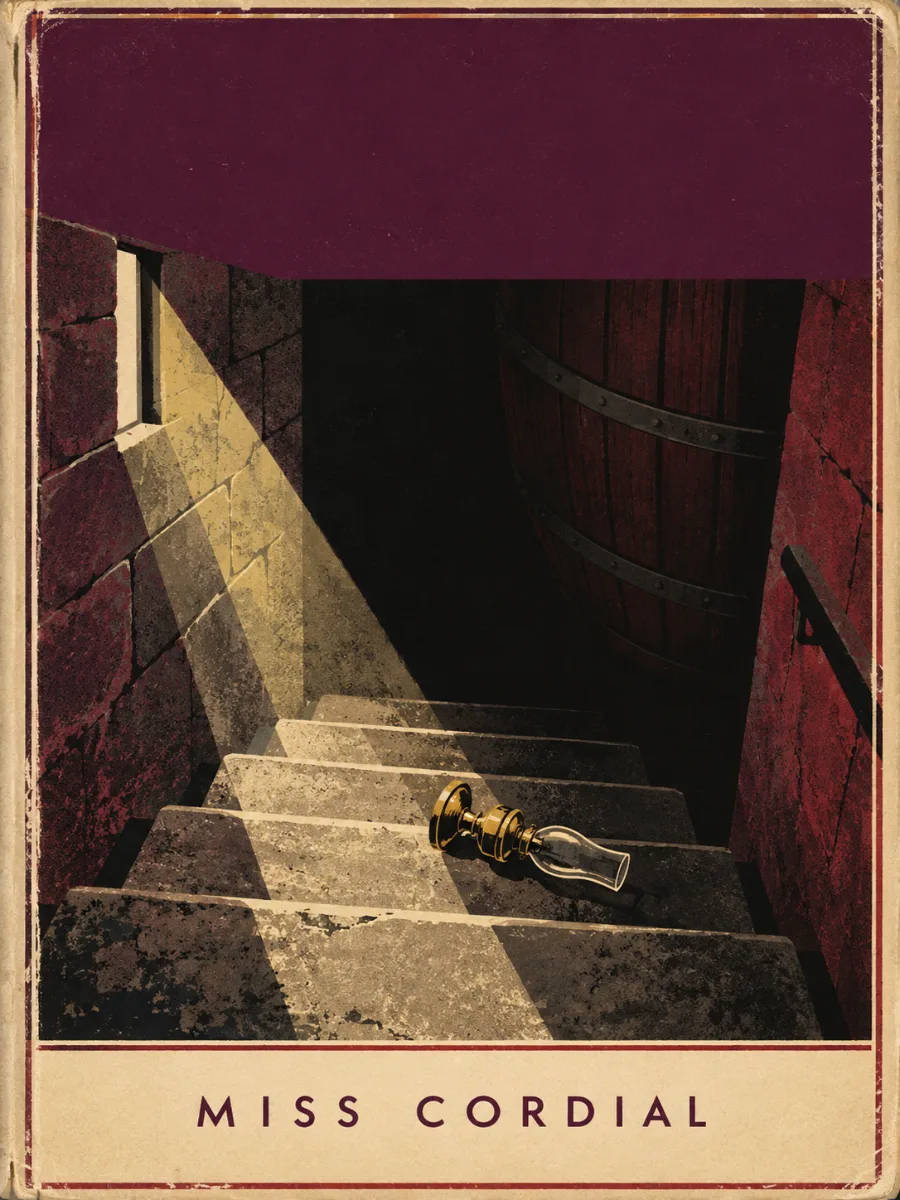
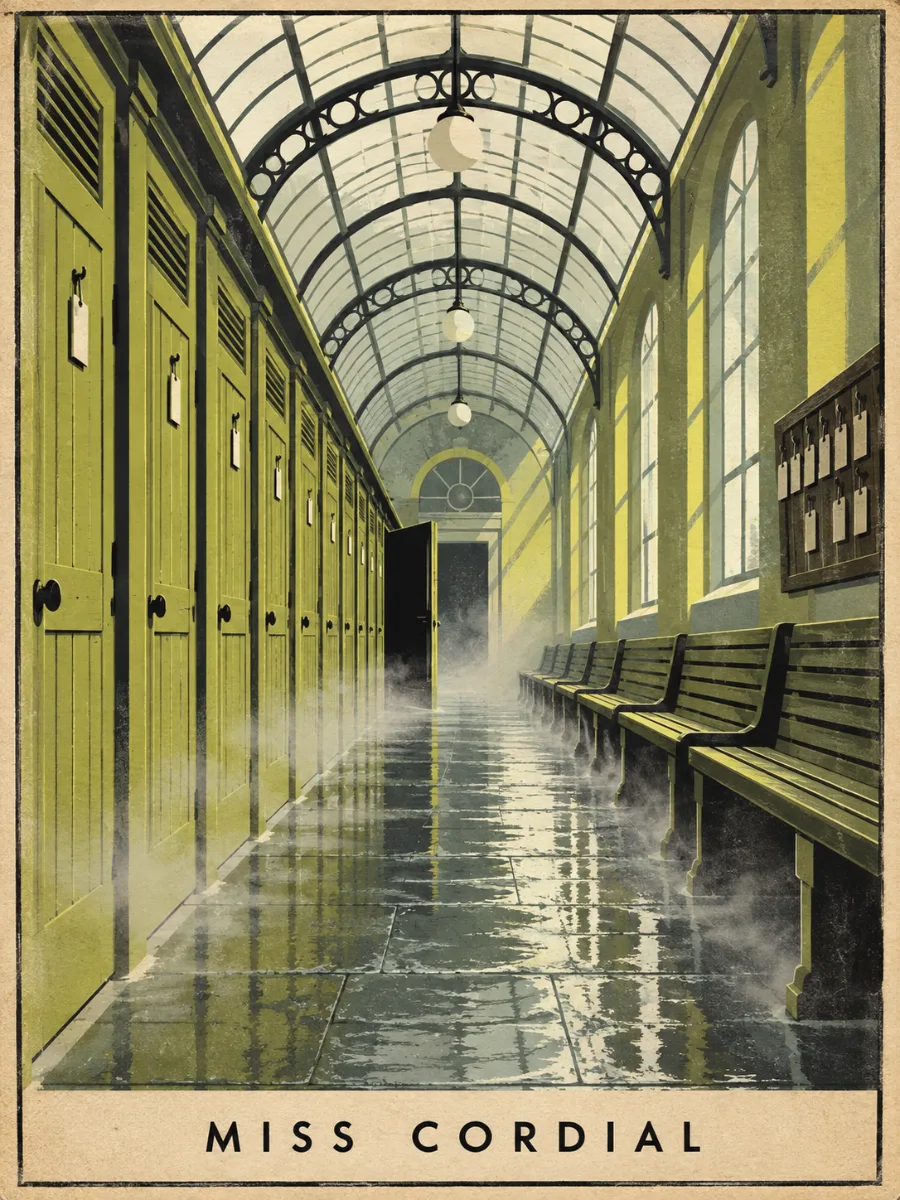
The bath gallery at Sotienza was a long hall with a glass roof. It had twelve wooden cubicles down one side and a row of benches down the other. It smelled of hot lime and rotten egg in a way that after half an hour one stopped noticing. Nicolás Trigo, the bath attendant, took him to see it before dinner and showed him things in order, with no enthusiasm whatever.
"Cubicles one to twelve. Number three is the end one, which is further off and that's why it's asked for by people who don't want to hear anybody. There, my chair. And there, the board."
The board was a sheet of cork with two rows of hooks, and from each hook hung a yellow card. Duarte went over and read a few of them.
"And what is this?"
"The tickets. Don Casimiro signs them. He puts the cubicle, the time, the degrees and the minutes, and I do it."
"And if a gentleman tells you he wants the water hotter?"
"I tell him to tell don Casimiro." Nicolás shrugged. "I do what it says. I don't ask and I don't get into trouble."
"Show me mine."
Nicolás took it off its hook. Cabral, D. — cubicle 9 — 8:15 — 36 degrees — twenty minutes.
"Thirty-six degrees," Duarte read aloud, with sincere horror. "Thirty-six degrees is washing-up water. Ora, criatura, I have come to a spa, not to a rinse."
"It's what it says."
"It is what it says," Duarte repeated, and hung the card back on its hook himself, crooked.
They dined at nine in the dining room, all at one long table, because in the last week of the season there were no longer enough for more. There were eleven of them besides him.
Within ten minutes Duarte knew that doña Elvira Camargo was a widow and that this was her sixteenth season. He knew that her husband had been a cattle dealer and a very good sort except where money was concerned. He knew that last year's soup had been better. And he knew that in March the doctor in Zamora had told don Rosendo Vilar that his heart was "like an old espadrille".
"Doña Elvira, for heaven's sake," said Vilar from the other end.
"You said it yourself, man. You said it here in June."
"I said it in confidence."
"Well, there's no confidence here that lasts an afternoon," doña Elvira answered, thoroughly pleased with herself, and went on.
Duarte was genuinely delighted. He asked and asked, and he asked about nothing at all: he asked what time breakfast was served, whether the bread came from Alcorlá, who had sat where last year, whether the glass roof dripped when it rained. He told two cases of his own that had no bearing on anything and laughed loudly at both of them.
Don Anacleto Ruedas, who had gout and a napkin tucked into his collar, explained his treatment to him without anybody asking.
"Forty-two degrees. And thirty-five minutes." He held up two fat fingers. "Not everybody can stand that, eh? The Béjar woman's son got in there last year and came out in four minutes as white as paper."
"É um homem de ferro, don Anacleto. A man of iron."
"Because otherwise it doesn't cure you."
Teodoro Manrique, sitting opposite, ate fast and answered before he was asked.
"I'm in land. I buy and sell. I do these three weeks every year for my rheumatism, and after that I don't stop until January. I tell you this because at these tables one always ends up explaining what one lives on."
"I had not asked you, my friend."
"Quite. That's why I say it."
Purificación Escolano came in halfway through dinner to say something to the bath attendant, who was pouring the water. In passing she put a finger inside the collar of his uniform and pulled it straight.
"Nicolás, that collar."
The attendant moved away at once, without saying anything. Duarte saw it perfectly well and made no remark, and helped himself to more wine.
Doña Amalia Sertorio de Terreros was on his left and was, of them all, the only one who asked him anything about himself. She was a woman of forty-odd, very well turned out, with a way of listening that made whoever was talking feel interesting. Her husband, a big silent flour miller, ate beside her and took no part.
"And you, my dear señora, what are you doing in a place like this?"
"Keeping him company." She laughed. "Ubaldo's stomach is a disaster and I am as sound as an apple. But it's this or staying at home alone for three weeks, and alone at home I become unbearable."
"Children?"
"One. Pilar." And there her face lit up in quite another way. "She's marrying in November. A boy from León, very steady, from a family that's always been there. We're up to our ears in papers, don Duarte; to get married these days you need more documents than to cross a frontier."
"It is the first time in my life I have heard anybody say that cheerfully."
"It's because that wedding takes ten years off me." She said it looking straight at him. "When I see her come out of the church I shall sit down on the step and cry like a fool, and I don't care who sees me."
Doña Elvira, from her place, took advantage of the silence.
"There's seven o'clock mass in the village on Sunday, don Duarte, in case you fancy going down. Half the house goes."
"And the other half?"
"The other half sleeps, which is what I do. Though not much." Doña Elvira fanned herself with the menu. "I sleep terribly and I get up at six, and I swear to you that at that hour in this house there is nobody awake but Señora de Terreros and me."
"We don't go to mass," said Amalia. "At that hour my husband is in his bath and I wait for him in the gallery, which is the only place where it's warm at that hour."
"Then go down to the church, woman, there's a stove there too."
"There's a draught there, doña Elvira. I know because I've tried it."
And they talked about something else. As they got up from the table, Ubaldo Terreros said to Duarte in passing, in the voice of a man saying nothing at all:
"Don't take too much notice of my wife about waiting for me. She sleeps terribly, she always has. She comes down because she can't bear her bed."
Sunday was a wasted day.
Duarte looked for Vilar four times and all four times there was somebody in the way. At breakfast, doña Elvira. On the walk, don Anacleto. In the reading room, Manrique writing letters, and in the afternoon the whole house on the terrace, because the sun was out. Vilar dodged him cleanly, with a skill that struck Duarte as professional.
In the end, at night, he caught him in the bedroom corridor.
"Don Rosendo, this is beginning to be absurd."
"Tomorrow." The old man had his key in his hand and did not open the door. "Tomorrow I come out of my bath at a quarter past seven and come up. At half past seven I am in my room and so are you, and I tell you the whole thing, and I give you three names."
"Three."
"Three." Vilar stood a moment with his hand on the handle. "And of the three, two of them I'm sorry for. That's the worst of this business, you know? That one ends up knowing them."
He put the key in and locked the door on the inside.
On Monday at ten past eight in the morning Duarte was in his cubicle, number nine. He had been sitting for a quarter of an hour in twenty centimetres of water at thirty-six degrees and in a filthy temper. He heard the attendant knock twice at a door and then push it open.
There was an odd silence, one of those that can be felt through wood.
He came out wrapped in his sheet and went along the gallery barefoot, leaving prints on the flagstones. The door of cubicle three stood wide open and Nicolás Trigo was standing on the threshold without going in.
Rosendo Vilar was still in the bath, with his head thrown back and his mouth open, and the water came up to his chest and was still steaming.
Duarte put two fingers in the water and took them out at once.
"Nicolás," he said, in a voice the attendant had not heard from him until then. "What time did you put this gentleman in here?"
What Is Said Without Fear
Chapter 2
II
Sergeant Idoate arrived from Alcorlá at midday, and the first thing he did, even before looking at the body, was to look Duarte slowly up and down.
"I've seen you in the paper."
"Pois claro, sergeant. Of course you have."
"In the paper, and in two of them." Idoate took off his three-cornered hat and put it on the counter. "And in both of them you were telling people what needed doing. Here what needs doing is said by me, and you are a guest."
"I am a guest," Duarte confirmed, greatly pleased. "A guest with his room paid for until Saturday, which is more than half this house can say. And I shall save you the trouble of finding it out: don Rosendo Vilar wrote to me in August, paid me for eight days in advance and asked me to come. I arrived on Saturday and he told me nothing, because he wanted to tell me on Monday. You see what a way of arranging things."
They took the body out of cubicle three at nine and laid it out in the treatment room. Don Casimiro Bayo examined it for twenty minutes with the door open and half the house craning in the corridor, and then came out drying his hands.
"The heart," he announced. "I have been telling this man so since March, and I know for a fact that they told him the same in Zamora. A hot bath and a heart like that are two things that ought not to be in the same room."
"Doctor, have you looked at the skin?"
Bayo stopped.
"What is the matter with the skin?"
"That it is red up to the chest and not red in the face," said Duarte. "And that I put two fingers into that water at ten past eight, an hour and a quarter after it was run, and it was still scalding. Go on, say it. It will cost you less now than in three days' time."
The doctor visibly took his time about answering.
"It was hotter than I ordered. And he was in it a good deal longer than I ordered. That is true and I shall put it in writing if need be, but it does not change the substance: this man was killed by the heart he had."
"What did you order?"
"Thirty-eight degrees. Fifteen minutes. It is written on his ticket and I signed it."
Idoate went straight to the board, took don Rosendo Vilar's yellow card off its hook and read it twice aloud in front of everybody.
Vilar, R. — cubicle 3 — 7:00 — 38 degrees — fifteen minutes.
"Thirty-eight and fifteen," he repeated. "Signed. And who runs the water?"
Nicolás Trigo was in the gallery doorway with his hands hanging.
"I do."
"And what water did you run him?"
"What it says."
"What it says." Idoate put the card away in his folder. "Well, what it says wasn't what it was."
Nobody said anything. Purificación Escolano put herself in front of the attendant, with both hands in front of her apron, and spoke in her front-desk voice.
"Nicolás has been twenty years in this house, sergeant."
"Twenty years running water is a long time never to make a mistake, señora. I should say he was due one, and that he has had it with the worst customer in the house."
Breakfast that morning was served late and in silence, except for don Anacleto Ruedas, who had been complaining since eight and found nobody to pay him any attention.
"Lukewarm," he kept saying. "Lukewarm as an invalid's broth. And at ten minutes there was the man knocking at the door for me to come out. Ten minutes! I pay for thirty-five."
"Don Anacleto, a gentleman has died," said doña Elvira.
"I know a gentleman has died, and I am very sorry, and he was a good sort. But one thing doesn't cancel the other, doña Elvira. Tomorrow I want my forty-two degrees and my thirty-five minutes, and I say it here in front of everybody so that it is on record and so that I don't forget."
Duarte, who was buttering bread on the other side of the table, did not raise his head and did not say a word. He went on buttering, very slowly, until the bread broke in half.
Afterwards he sought out doña Elvira Camargo in the reading room, sat down beside her uninvited and spent an hour and a half listening to her.
"Forty years in the studio, in Astorga first and then in Zamora," she was saying. "Weddings, first communions, conscripts, school groups. And the dead, don Duarte, which isn't done nowadays but was then. They would call him to the house and he would photograph the dead man dressed and combed, with the family behind him, and that would be framed and hung in the passage."
"Coitado. What a trade."
"He used to say he was the only photographer in the world whose clients kept still." Doña Elvira laughed and immediately turned serious. "And he kept the plates. All of them. He showed me once: he has a room in Zamora full of drawers, and in every drawer a whole village of the dead."
"And he threw nothing away?"
"That man never threw anything away in his life. Neither the plates nor a céntimo."
In the middle of the morning he went down to the gallery again and sat on the tiled bench, in the very place where Vilar had sat on Saturday. Nicolás was scrubbing the flagstones with a bass brush.
"Nicolás, do me a favour and lend me the brush a moment. No, don't put it down, go on scrubbing; my conversations come out better when the other man has his hands busy. Do you take me for a fool?"
"No, sir."
"Then look at me when I talk to you, because it is going to be necessary." Duarte crossed his very long legs. "What time do you open this gallery?"
"At half past six. I put the lights on and start running the taps in the twelve cubicles, one by one, and that takes me a good twenty minutes. With the water falling in there you can't hear the train. And then I come out and wait."
"And who comes down at that hour?"
Nicolás went on scrubbing quietly for a while before answering.
"Early in the morning nobody comes down but the lady."
"What lady?"
"The Terreros lady. She sits there on the bench and waits for her husband, who goes in at a quarter past seven." The attendant hitched one shoulder. "Every day. Eighteen Septembers."
"And this morning?"
"This morning I didn't notice, sir. This morning I was with don Rosendo and then with doña Elvira, who comes over faint."
"I see." Duarte sat a moment looking at the cork board, with its two rows of hooks and the yellow cards hanging very straight. "Is that board always there?"
"Always."
"And who goes past that board?"
"Everybody, sir. It's the passage. They go that way to the baths, to the treatment room and out to the terrace."
Rosendo Vilar's room was number seven and it was on the first floor, and Purificación Escolano opened the door with two fingers and stayed outside.
"I don't go in there, and I shall be grateful if you don't ask me to. I have had four deaths in this house in twenty-six years and I have not gone into the room of one of them until the family had taken him away."
Duarte went in alone. There was a cardboard suitcase, a bellows camera in its case, a bottle of drops and, on the bedside table, an opened envelope with no sender's address.
He took out the half-sheet. It was written in pencil and in capitals, in a hand that had gone to some trouble not to belong to anybody.
IF YOU WRITE ME ANOTHER LETTER I SHALL TELL THE WHOLE THING AND TAKE YOU DOWN WITH ME.
Duarte read it three times, left it where it was and sat on the bed to look at the room. The block capitals were clumsy and very cramped, the work of somebody who had written slowly so as not to recognise himself, and the paper was the kind kept in the reading room of that same house.
Then he opened the suitcase.
Under two folded shirts there was a black oilcloth notebook, the kind used for accounts, with an elastic band round it. On the cover, in a good commercial hand, it said: Orders.
He opened it and found exactly what it claimed to be. Enlargements, retouching, copies, frames. Dates, names and sums, all in columns, forty years of a studio photographer noting down what was ordered from him.
It took him twenty minutes to see it, and he saw it because he read slowly and aloud, which is how people who never write anything read.
"April. Escolano, enlargement, two hundred." He turned a page. "October. Escolano, enlargement, two hundred." He turned another. "April. Escolano, enlargement, two hundred."
He went backwards. Nine years running, twice a year, April and October, two hundred pesetas. The same sum, the same month, the same person. No photographer in the world makes the same enlargement for the same client eighteen times running at the same price, and still less with the punctuality of an electricity bill.
And on the same pages, in the same months, there were two other names.
Terreros, enlargement, two hundred. Nine years.
Manrique, enlargement, two hundred. Eleven years.
Duarte stopped with his finger on the last written page. There, in April of the current year, there was an entry for Terreros and, four lines below, in the same month, another entry for Terreros.
"Well, well," he said aloud. "You have put somebody's price up."
He shut the notebook, put the band round it and slipped it into the inside pocket of his jacket, where he carried the wallet of cuttings.
Purificación was still in the corridor when he came out.
"Have you found anything?"
"A bottle of drops and a camera." Duarte closed the door very carefully. "My dear señora, may I ask you an indiscreet question?"
"You may ask it."
"Why was don Rosendo's room never put up?"
Purificación did not move a single muscle of her face.
"Because he had been coming for eighteen years."
"Doña Elvira has been coming for sixteen and you have put hers up twice. She told me in detail, and with the figure."
"Doña Elvira talks a great deal."
"Doña Elvira talks a great deal," Duarte repeated, delighted, "and that is why people think she says nothing. It is the most expensive mistake made in houses like this one, my dear señora, and I have seen it paid for three times. The ones who talk a great deal tell you everything and find out nothing. The dangerous ones are the ones who answer short."
That night nine of them dined, because don Casimiro stayed down in the village and Manrique said he had a headache. Nobody talked about the dead man and everybody talked about the dead man.
As they got up, Sergeant Idoate came up beside him in the corridor.
"Tomorrow I am taking the bath attendant to Alcorlá."
"You have not taken him yet."
"Tomorrow. I want the doctor's report in writing and I shall have it by midday." Idoate pulled his hat down. "And you, what exactly are you doing here? Your man is dead. Who is paying you now?"
Duarte thought about it seriously for a moment.
"Nobody, sergeant. Nobody is paying me and nobody has asked me to stay, and I assure you it is a situation I would not wish on you."
"Then go home."
"The trouble is that I was paid for eight days in advance." He brushed a speck off the linen at his shoulder and smiled at him with his whole face. "Three have gone. Five paid days are left, and I do not give a dead man's money back by halves."
He went up to his room, sat on the bed without turning on the light and spent a long while going over from memory the whole of Saturday's dinner conversation, from the beginning, like a man turning again the pages of a book he has already read.
There had been eleven people talking about nothing for two and a half hours, and not one of the eleven had had anything to hide yet.
It was by a long way the best material he had ever had in his life.
What Is Said Without Fear
Chapter 3
III
On Wednesday morning Duarte Cabral de Meneses devoted himself to asking idiotic questions.
He began at breakfast and went on out on the terrace and in the reading room. By lunchtime there was a tacit agreement in the house that the Portuguese had suddenly turned simple. He asked who had sat where on Saturday. He asked whether Saturday's bread was the same bread as Sunday's. He asked what time the corridor lights were put out and whether the glass roof dripped.
"But my dear man," don Anacleto said to him, "what does the bread matter to you?"
"The bread matters to me enormously, don Anacleto. I come from a country where bread is a religion and here it is something they fetch from Alcorlá."
He did it all out of order and on purpose. He would ask one person the third thing and then the first, and another the first and the fifth, and a third he would ask what he had already asked the first. And he wrote nothing down.
He never wrote anything down. It was the only piece of vanity of his that cost him nothing, and he explained it at the first opportunity.
"A notebook is a most dangerous thing, doña Elvira. The man who writes things down trusts what he has written down, and what one writes down is what seemed important that day. And I assure you that the important thing is never what seemed important that day."
Doña Elvira Camargo he left until after lunch, because doña Elvira was the standard by which the others had to be measured. Doña Elvira told things twice and told them the same, and that, in a house where everybody was beginning to remember differently, was worth its weight in gold.
"Tell me again about your sleeping."
"About my sleeping badly?"
"That."
"Well, I sleep terribly, my dear." Doña Elvira settled herself in the wicker chair. "I sleep terribly and I get up at six, and I swear to you that at that hour in this house there is nobody awake but Señora de Terreros and me. I told you so on Saturday and I tell you so today."
"You told me on Saturday in those very words."
"Of course. It's what there is."
Duarte took her hand and kissed it, which doña Elvira found excessive and splendid.
Don Ubaldo Terreros he found on the terrace, alone, with Monday's newspaper on his knees and not reading it.
"Don Ubaldo, a foolish thing. What time do you go in for your bath?"
"At a quarter past seven. Every day of my life for eighteen years."
"And do you go down alone?"
The flour miller took longer to answer than a man takes to say yes or no.
"I go down alone."
"On Saturday you told me something else, if I remember rightly. You told me your wife comes down because she can't bear her bed."
"My wife does as she pleases and accounts to nobody." Ubaldo folded the newspaper in half, very slowly, and folded it again. "Look here, don Duarte. I am a clumsy man and I don't know how to say things. But I shall say one thing and I beg you to understand it. There is a great deal of talking going on in this house this week, and my wife, who has never done anything in her life, is going to be splashed by all of it for no other reason than being here. I shall not allow that."
"You will not allow it."
"I will not." He got up with the newspaper under his arm. "And if something has to be paid for it to stop, tell me how much and to whom, for it would not be the first time."
He went off towards the dining room without waiting for an answer, and Duarte stayed on the terrace with his eyebrows raised until his coffee went cold.
Then he went up to look for Teodoro Manrique, and Teodoro Manrique was not there.
They took him off the country bus at kilometre nine, between Sotienza and Alcorlá, sitting by the window with a suitcase on his knees and his ticket paid as far as León. The two guardias brought him back before five and put him in the treatment room, which was the only room with a key.
Idoate asked him three questions and Manrique collapsed at the second.
"I didn't kill him."
"Men who haven't killed anybody don't take the eleven o'clock bus."
"I took the eleven o'clock bus because the moment you people start looking at papers my life is over, and that has nothing to do with that poor man." Manrique had his hands on the table and both of them were shaking. "Listen to me. I have a brother. Had."
Duarte was leaning against the doorframe and had not opened his mouth.
"Bruno Manrique," he went on. "He died eleven years ago in a lodging house in Palencia, of pneumonia, in three days. And he was a railway pensioner and drew eighty-one pesetas a month."
"And you didn't report it," said Idoate.
"I paid for the funeral and I didn't report it." He ran his tongue over his lips. "Eleven years. Eighty-one pesetas a month for eleven years, sergeant, and you have no idea how little it is and how impossible it is to live without it."
"And what had Vilar to do with it?"
"The landlady called in a photographer. It was done in those days." Manrique shut his eyes. "They dressed the dead man, sat him up and took his portrait, and behind him there I am standing with my hand on the chair back. Eleven years later I meet him here at breakfast and he says to me: 'You're the man from Palencia.' Just like that, with a smile, passing me the sugar."
"And the anonymous letter?" Duarte asked from the door.
Manrique took his time about answering.
"I wrote it in August, in the reading room of this house, on this house's paper. And I repented of it two days later and it had already gone." He raised his face. "I swear to you by my brother that the only thing I have done in my life is fail to report a death."
"I believe you," said Duarte. "And I shall tell you why I believe you, which is more useful. A man who has spent eleven years drawing a dead man's pension is a man who has spent eleven years making no noise. A man who has made no noise in eleven years does not begin on a Monday morning with a murder."
"I don't believe him," said Idoate. "And the one who took the eleven o'clock bus was him and not you."
Doña Purificación Escolano he found at seven, in the back yard, burning papers in a drum.
"Boa tarde, my dear señora. Is the bookkeeping piling up?"
"The season's invoices are piling up."
"In September."
"In September, yes."
Duarte went over to the drum, looked inside without any hurry and moved slowly away.
"I am going to tell you one thing and then I shall hold my tongue and you will do as you like." He put his hands in his pockets. "This morning I sent a telegram to the foundling hospital in Zamora. They answer me tomorrow at midday."
Purificación Escolano stood with the poker in her hand and her arm halfway up.
Duarte had sent no telegram. He did not know whether there was a foundling hospital in Zamora, and if there was he had not the slightest right to ask it anything. He stood looking at her with his white eyebrows raised and the face of a man who already knows everything.
"He's mine," she said.
"I see."
"Nicolás is mine." She dropped the poker into the drum. "I was nineteen and I left him there on a Tuesday in February, and when he was twenty I took him out and put him in here as a stable boy, and here he has stayed. And he doesn't know, and nobody knows, and nobody is going to know."
"Don Rosendo knew."
"I told him myself." Her voice went very flat. "One night at the end of the season, twenty years ago, one of the nights when there's drinking. I told him with these two hands, sir, and he never once threw it in my face. He never said a word to me. He simply stopped paying for his room and I entered it in the book as though nothing had happened, and so for eighteen Septembers."
"And the two hundred pesetas in April and October?"
"Those as well." She raised her eyes. "That man never threatened me. Not once, not with a word, not with a look. That is what you people will not understand: he was the kindest of men. He came in September, he sat on that bench, he asked after the boy with real interest, and I paid."
"And this spring?"
"This spring the same as the other twenty." She stirred the ashes in the drum with the tip of the poker. "He never put mine up. He kept me at two hundred from the beginning, like a rent. I believe that at bottom he liked coming here and being asked after his health, and for that he needed this house to stay standing."
Doña Amalia Sertorio de Terreros he left until last, and he asked her the foolish questions in the strangest order of all.
They were in the gallery, sitting on the tiled bench, with the whole house upstairs at dinner.
"Saturday's bread."
"I beg your pardon?"
"Saturday's bread, my dear señora. Was it the same as Sunday's?"
Amalia laughed, with less appetite for it than she had had on Saturday.
"I can't tell one loaf from another, don Duarte. I'm sorry."
"Nobody can. It is an idiotic question, I grant you." Duarte stretched out his legs. "Another idiotic one: do you go to mass?"
"Not to mass."
"And what do you do at seven in the morning in a place where there is nothing to do?"
And there, for the first time since Duarte had come to Sotienza, doña Amalia Sertorio answered short.
"Me? In the mornings I don't get up until nine. Ubaldo goes down alone, always."
Duarte nodded slowly, twice, and said nothing for a good long while. Then he got up, pulled his waistcoat straight with both hands and looked for a moment towards the end of the gallery, where the cork board hung on the wall with its twelve yellow cards perfectly straight.
"How I envy you. I have not slept until nine in thirty years."
He went up behind her and stayed at the end of the corridor, watching the door until it shut.
At ten at night Sergeant Idoate took Nicolás Trigo away under arrest.
They brought him out through the hall with the whole house leaning over the stairwell. The attendant went without handcuffs, with his uniform jacket on and his collar badly fastened. He stopped a moment in front of the desk and left the bunch of gallery keys on it, because it seemed to him that was what one did.
Purificación Escolano took the keys and did not look him in the face.
"Sergeant," said Duarte, "that man ran the water the card said."
"That man ran water at forty-two degrees into a bath whose card said thirty-eight, and there is a dead man." Idoate pulled his hat down. "You will have been paid to look for stories. I am paid to close them."
"Give me until tomorrow."
"No."
"Give me tonight." Duarte came down the three steps into the hall and planted himself in front of him, and for once he was not smiling. "Two hours, sergeant. After dinner, in the drawing room, with everybody sitting down. If in two hours I have not shown you something else, you take that man away and I catch the seven o'clock train and you never see me in your province again."
Idoate looked at him for a long time, unable to decide.
"You appear in the papers a great deal."
"I do. And it does not feed me, I assure you."
The sergeant thought it over, looked at the attendant, who was waiting in the doorway understanding nothing, and looked back at Duarte.
"Two hours."
"Let nobody be missing," said Duarte. "And do me one last favour: have the board of tickets brought in and put on the drawing-room table."
What Is Said Without Fear
Chapter 4
IV
They put the cork board on the drawing-room table, propped against a vase, with the twelve yellow cards hanging from their hooks.
They all sat down. Doña Elvira on the sofa, with don Anacleto beside her. Purificación Escolano standing by the door, as always. Don Casimiro Bayo in the wing chair. Manrique on a chair, between two guardias. The Terreros together, he with his hands on his knees and she very straight. Sergeant Idoate stayed at the back, watching the clock on the mantelpiece.
Duarte planted himself in front of the cold fireplace, pulled his waistcoat straight and began where nobody expected.
That night he did not say "pois" once, and doña Elvira Camargo, who was the only person in that house who noticed such things, saw it at once and did not know what to make of it.
"For three days I have been asking you people about the bread."
Nobody laughed.
"And about who sat where, and about whether the roof drips, and about the hour the corridor lights are put out. You have thought, with every reason in the world, that I was simple or that I was very odd." He raised an enormously long finger. "Now I shall explain why I do it, and afterwards I shall never need to explain it again."
He leaned on the mantelpiece.
"Nobody lies in the trimmings. A lie is prepared: one learns the hour, the place and the name, and repeats them the same all week. But something has to be put round the lie, because an hour on its own will not stand up, and what is put round it is not prepared. It is taken from whatever is to hand. And what is to hand, gentlemen, is what one has seen."
"Very pretty," said Idoate. "You have ninety minutes left."
"And there is something better still." Duarte paid him not the slightest attention. "A trimming is never corrected. Nobody goes back three days later to some triviality they said in order to say it differently. It is not worth the trouble. Nobody corrects the bread."
He looked round the whole room, one by one, without hurrying.
"Unless in those three days the triviality has turned dangerous on them."
He took a chair, turned it round and sat astride it, which was a thing nobody had done in that drawing room in twenty-six years.
"Let us take what is left over, which is nearly everything. Don Teodoro."
Manrique raised his head.
"This gentleman has spent eleven years drawing the pension of a brother he did not bury properly. Don Rosendo Vilar photographed the body in Palencia and remembered his face. It cost you two hundred pesetas in April and two hundred in October."
"Yes."
"You wrote an anonymous letter in August, on this house's paper, and repented of it two days later. And on Wednesday you took the country bus, because the moment the Guardia Civil opens a file in a place, it opens the whole of it." Duarte turned to the sergeant. "That is an offence and it is yours, sergeant, and I congratulate you. It is not this one."
"That I shall decide."
"Naturally. Doña Purificación."
The owner of the spa did not move from the door.
"This lady has been paying for twenty years, and she does not pay for money, she pays for one night in September when she said too much." Duarte said it with no sweetness and no cruelty whatever. "What she told don Rosendo that night is hers and stays with her, and is no business of this room. I know it because I lied to this lady this afternoon, in front of the drum where she was burning papers. I told her I had sent a telegram and I had sent no telegram at all. I ask your pardon, señora, in front of everybody, and I should do it again tomorrow."
Purificación Escolano had both hands in front of her apron and said nothing.
"And don Ubaldo Terreros." Duarte turned to the couple. "This gentleman has been paying for nine years, twice a year, two hundred pesetas. It is in don Rosendo's order book, in April and in October, with a punctuality that is a pleasure to see."
Amalia Sertorio turned her face towards her husband very slowly.
"Ubaldo?"
"Wait, my dear señora, we shall get there." Duarte raised a hand. "Before that we must talk about this board, which is the only thing that has killed anybody in this house."
He got up, went round the chair and lifted two yellow cards off their hooks.
"Don Rosendo Vilar's ticket. Cubicle three, seven o'clock, thirty-eight degrees, fifteen minutes." He raised the other. "Don Anacleto Ruedas's ticket. Cubicle five, half past seven, forty-two degrees, thirty-five minutes."
"And not one minute less," said don Anacleto.
"Not one less. You have been saying so for three days and nobody has listened to you, and you are the only serious witness in this house."
Don Anacleto sat up on the sofa.
"On Monday morning they gave you a lukewarm bath and took you out after ten minutes. You said so at breakfast, in front of eleven people, and everybody answered that a gentleman had died."
"I said it to him myself," murmured doña Elvira.
"You did." Duarte held up the two cards, one in each hand. "That morning, in this house, there were two mistakes. One man was given another man's bath, and the other was given the first man's. That is not an error, gentlemen. An error is one mistake. Two mistakes that fit together is a swap."
He hung the two cards up, each on the other's hook, and stood aside so that they could be seen.
"At twenty to seven in the morning, somebody went past this board and changed these two cards over. They forged nothing. They wrote nothing. They broke nothing, and they did not touch don Rosendo Vilar for a single minute of his life. They changed two cards on two hooks and went in to breakfast."
Don Casimiro Bayo had gone very pale.
"And at seven," Duarte went on, "Nicolás Trigo did what he does every day of the last twenty years: he read the card and ran the water it said. Forty-two degrees. Thirty-five minutes. And he put into it a man of sixty-six with a heart, and I quote doña Elvira, like an old espadrille."
"I said that in June," doña Elvira protested, in a thread of a voice.
"You said it in June, you repeated it at dinner on Saturday in front of eleven people and you will say it again. You are the only person in this house who tells things always the same way, and that is why you have served me as a clock."
Nobody was speaking. Sergeant Idoate had come away from the wall.
"The best is still to come," said Duarte. "At nine in the morning, with the body already out, the gallery full of people and the whole house going up and down, that same person went past the board again and changed the cards back."
He returned the two cards to their proper hooks and took a step back.
"And that is why, when the sergeant arrived at midday and took down don Rosendo's ticket, it said thirty-eight degrees and fifteen minutes, and it was signed by the doctor, and everything was in its place. And that is why a man of thirty-nine is leaving here tonight between two guardias."
Idoate said nothing, which in him was saying a great deal.
"Now allow me to describe to you the person who did this, before I say the name. It is the only thing I do well."
Duarte went back to the fireplace.
"This is not a violent person. They touched nobody, they did not shout, they forced nothing and they ran no physical risk whatever. This is a person who settles things by moving a small object fifteen centimetres to the left."
The comic voice he had been carrying about since Saturday went out of him.
"They did not steal the card, mark that well. They could have stolen it. It would have been quicker and easier. But an empty hook can be seen from the other end of the gallery, and two cards changed over cannot be seen even if you look at them. This is a person who knows, with a precision that chills me, what people notice and what people do not notice. That is not learned in a week. That is learned by living many years in fear that something about you will be noticed."
Doña Elvira put her hand quickly to her mouth.
"And there is one last thing, and it is the one that kept me standing still for two days. That person was in the gallery at twenty to seven in the morning, alone, in front of that board, in a house with twelve guests. And nobody saw them."
He turned towards the door, where the bath attendant no longer stood.
"At that hour Nicolás Trigo has been twenty minutes inside the cubicles turning on taps, and with twelve taps running in there you cannot hear the train. He explained it to me himself on Monday, scrubbing the floor, and I attached no importance to it whatever."
Duarte waited.
"And nobody saw them because they see them every morning."
In the drawing room at Sotienza the clock on the mantelpiece could be heard, a clock nobody had heard until then.
And then, while everybody else was looking at Duarte Cabral de Meneses, doña Amalia Sertorio de Terreros turned her head and looked at the board.
It was a very small movement and it lasted barely a second. She was the only person in that room who, at that moment, wanted to check the object.
"My dear señora," said Duarte, very gently. "On Saturday evening, at dinner, talking about Sunday's mass, you said this to me. And nobody had asked you."
He shut his eyes for a moment, like a man looking for a page.
"We don't go to mass. At that hour my husband is in his bath and I wait for him in the gallery, which is the only place where it's warm at that hour."
Amalia did not move.
"And yesterday afternoon, with you and me sitting in that gallery, I asked you what you did at seven in the morning, and you said this to me."
Then: "Me? In the mornings I don't get up until nine. Ubaldo goes down alone, always."
Duarte opened his eyes.
"One of those two things you said without fear."
Ubaldo Terreros had got to his feet without anybody noticing.
"Amalia," he said. "I have known for nine years."
His wife turned to him for the first time.
"Known what?"
"About Astorga. About the first husband." It cost the flour miller a great deal to speak and he went on speaking. "That man came to the mill nine years ago, with a photograph in an envelope, and I paid him. And I have paid him in April and in October ever since, and I meant to go on paying him until he died." His voice broke once only. "And I didn't tell you so that you shouldn't have the bad time of it. Nine years without telling you, woman."
Amalia Sertorio sat looking at him with her mouth a little open.
"I have been paying him for four," she said.
"I know. I have known since tonight, sitting there."
Nobody in that drawing room dared look at anybody.
"In July he asked me for three thousand pesetas," she went on, in an entirely ordinary voice, which was the worst of it. "All at once. Because of Pilar's wedding, since one has to produce the parents' marriage certificate, and mine is worth nothing, and my daughter is left standing in the street in front of the boy's family." She smoothed her skirt with both hands. "And I cannot come by three thousand pesetas without asking my husband for them."
"Amalia."
"And I was not going to ask my husband." She raised her face and looked at Duarte. "That is all, sir. I did not want to kill anybody. I changed two cards over and went in to breakfast, and I had a white coffee, and at nine I came back and put them where they had been."
She got to her feet by herself, without anybody asking her to.
"And don't let them tell my daughter until after the wedding."
Sergeant Idoate took her to Alcorlá that same night.
Nicolás Trigo was released in the hall at a quarter to twelve, and the man stood there not knowing where to go, with his uniform jacket on and his collar badly fastened. Purificación Escolano came out from behind the desk with the bunch of gallery keys, put them into his hand and slipped a finger inside his collar.
"That collar, Nicolás."
"Yes, señora."
And they said nothing more to each other, because there was no need and because in any case they would not have known how.
Sotienza closed the season on Saturday, as it closes every year.
Duarte Cabral de Meneses came down last, with his case in his hand and his linen suit too pale for the cold that was already in the valley. At the desk he paid nothing, because his room was covered until that day by a dead man, and he charged nothing, because the dead man had never got as far as telling him what he was paying him to know.
On the terrace, waiting for the car, was doña Elvira Camargo with a short gentleman who had arrived on Thursday for three days and who had the face of a man who cannot escape.
"…and then the Portuguese stands up, picks up the two cards and says: 'there's one missing here.' And it was true. There was one missing. And the bath attendant burst out crying like a child, right there, in front of everybody."
Duarte stopped two paces behind her, with his case in his hand.
Not one was missing. The attendant did not cry. And he had said nothing of the kind, nor anything like it.
He stood a moment listening, with his white eyebrows raised, and then got into the car without saying a word.
The end
What Is Said Without Fear
What did this story leave you with?
Read next